A battery electric vehicle (BEV) is only as clean as the electricity grid that it runs on. A BEV charged by a grid backed by 100% solar, wind, or hydroelectric energy will definitely be the lower-emissions option compared to a combustion or hybrid car.
But when electricity is generated from fossil fuels, the question becomes whether it's cleaner to burn the fuel in the vehicle or at the power station. The answer is not straightforward.
A fuel-by-fuel comparison
Electricity generation sources can be split into two types: carbon-free and carbon-emitting.
The carbon-free category encompasses, among other sources, nuclear, biofuels, and renewables such as solar, wind, and geothermal power.
Aside from the emissions released during construction, these energy generation sources create no marginal increase in atmospheric carbon concentration.
Biofuels also do not add to marginal CO2. This is because their emissions are “pre-offset”. The crops that become these fuels have already absorbed the carbon that will be emitted once that fuel is burned, forming a continuous cycle. You can find out more about these fuels in our article on biofuels.
The carbon-emitting category encompasses three major fossil fuel power generation sources: coal, oil, and natural gas. According to Our World in Data, as a global average:
- Coal emits 970g of CO2 for a kilowatt-hour of electricity
- Oil emits 720g of CO2 for a kilowatt-hour of electricity
- Natural gas emits 440g of CO2 for a kilowatt-hour of electricity
Read more about why does thermal efficiency matter?
Fuel distribution across grids
Different nations have decarbonized their grids to varying extents, with some countries still relying heavily on coal and gas and others using alternative sources. Many countries in the Global North have taken significant steps towards decarbonizing, with nations like France and Norway producing over 90% of their electricity from low carbon sources.
On the other hand, many nations are still reliant on fossil fuels: over 50% of China’s electrical energy and over 70% of electricity in India is still produced by coal.
On the surface then, it may seem a simple choice: in markets where most energy comes from carbon-free sources, adopt BEVs. However, it is not that straightforward.
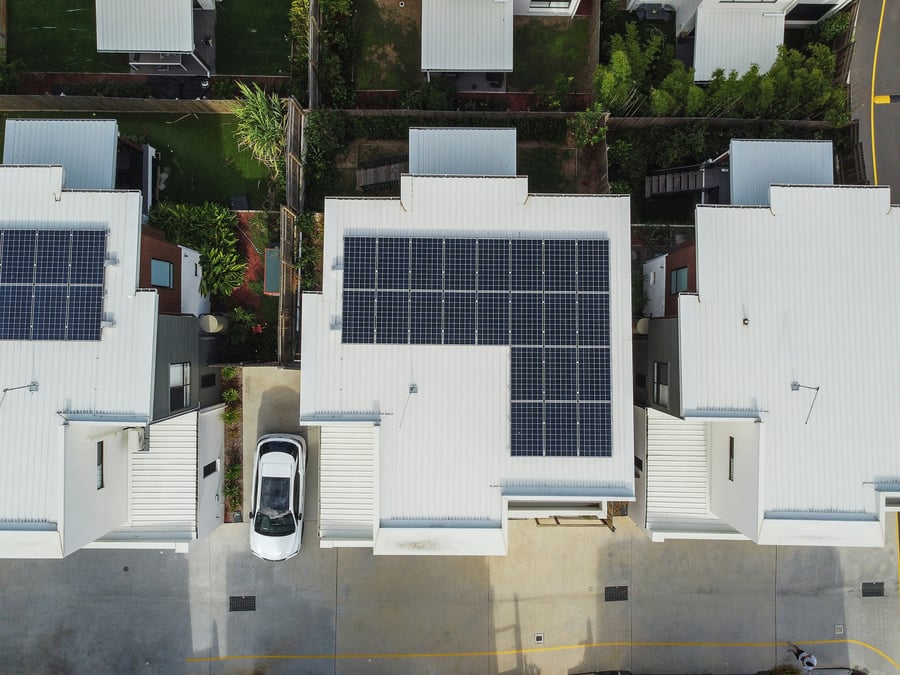
Carbon-free electricity generation encompasses, among other sources, nuclear, biofuels, and renewables such as solar power
Read more about why technological neutrality matters for Europe's automotive industry.
Marginal emissions
Because solar plants, wind farms, or nuclear power stations require no fuel – or in the case of a nuclear power station, such little fuel that it’s effectively a rounding error – they have the lowest marginal operating costs for grids and customers. That means that renewables tend to be fully utilized when available.
This means that unless a grid has a surplus of unused renewable electricity, then any new demand on the grid must be satisfied by a carbon-emitting source. These are known as marginal emissions: the emissions associated with adding a new kW of demand onto an electricity grid. And they’re often significantly higher than the average emissions produced across a grid.
From some estimates from an academic paper last year, many European grids have some notable discrepancies between average and marginal emissions. These include:
- Finland: Average emissions of 70g of CO2 per kWh, marginal emissions of 240g
- Germany*: Average emissions of 130g of CO2 per kWh, marginal emissions of 350g
- Italy*: Average emissions of 140g of CO2 per kWh, marginal emissions of 210g
- Spain: Average emissions of 210g of CO2 per kWh, marginal emissions of 340g
*Figure for the largest grid in the market.
This means that BEVs aren’t a quick fix to transport emissions, even if a grid’s average emissions are relatively low.
Unless a market expands renewable generation to meet the increased energy demand from adding BEVs, then the relative carbon saved compared to continuing with combustion or hybrid vehicles may be quite low. And in markets where the marginal source is something like coal, switching to BEVs might even increase emissions.
Read more about what's the difference between lifecycle and tailpipe emissions.
Taking a holistic view
Electric vehicles are undoubtedly going to play a key role in the green energy transition. However, it is important to understand where they fit into the wider picture.
BEVs are one technology among many. The carbon impact of a BEV is not the same in every market, which is why different technologies must be applied on a case-by-case basis.
Whether it be efficient hybrids, biofuels, or other alternatives, the right solution must be considered for each market. There are many roads to net zero. EVs are one, but it will take multiple solutions to help the world decarbonize.
Find out more about our solutions here.