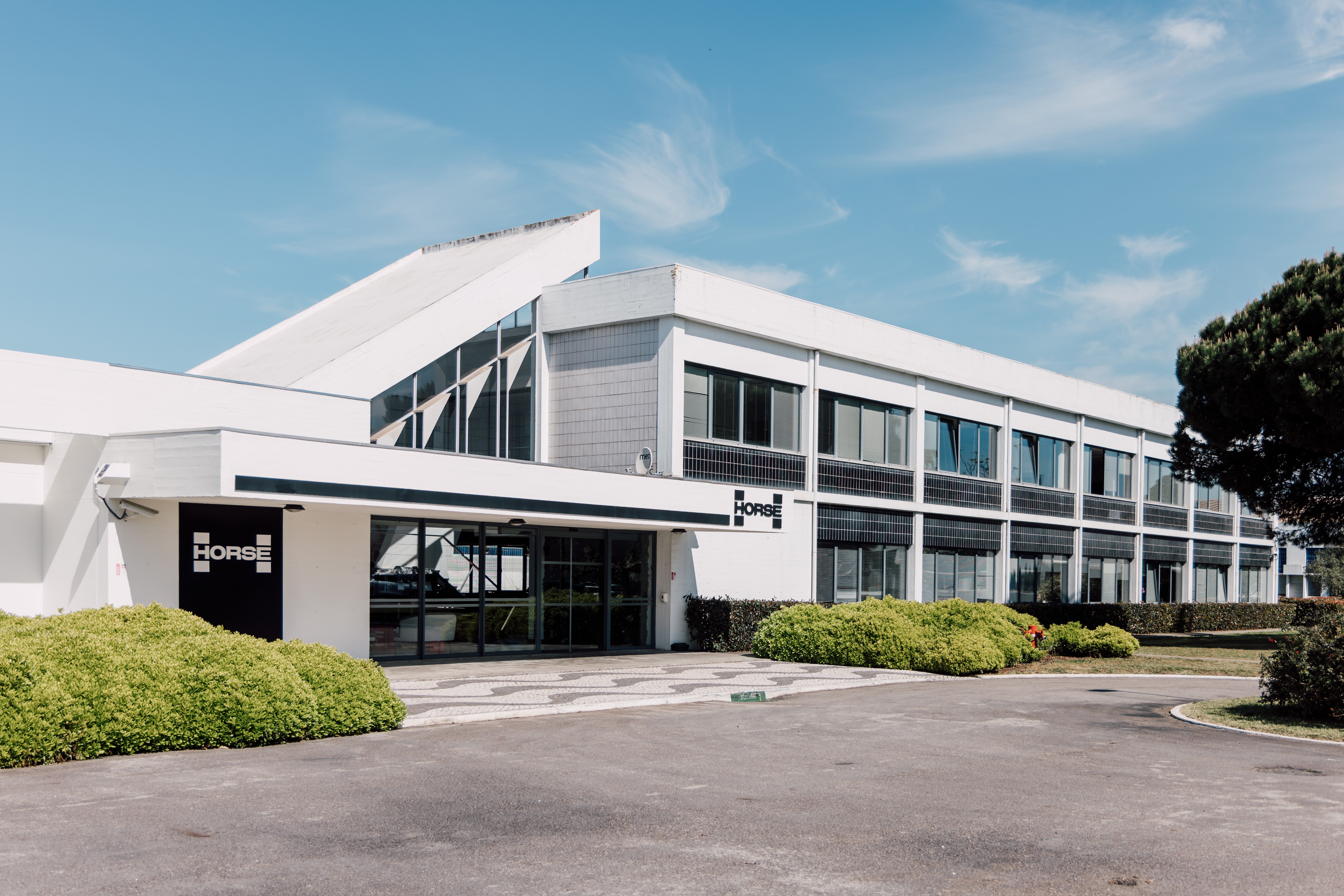
Interested to see what it takes to build an engine? From the way it’s tested before leaving the factory, to the transformational technology that’s behind developing and manufacturing modern powertrains.
At Horse Powertrain, innovation is not limited to the engine. It can be found throughout the process, from advanced manufacturing techniques and real-time production data to automated quality control and highly controlled testing environments.
Here are some of the technologies that we use at Horse Powertrain to help manufacture powertrains for today’s automotive industry.
Bore Spray Coating
Bore Spray Coating (BSC) is a standout technology.
Traditionally, engine cylinders used steel sleeves within an aluminum engine block. Whereas BSC applies molten steel directly to the aluminum cylinder.
During the process, two wires are fed into the coating equipment, where they’re melted and propelled onto the cylinder using nitrogen. Meaning that the steel coating is applied directly to the cylinder wall, rather than a separate sleeve.
The coating has microscopic pores that allow oil to penetrate the surface and provide lubrication between the cylinder and piston.
Once coated, the cylinder undergoes honing to create a smooth, mirror-like surface, rather than the traditional crosshatch pattern used on conventional cylinder walls.
But the technology doesn’t stop at the coating! The BSC process is continuously monitored, with parameters including wire voltage, electrical current and nitrogen pressures recorded in real time. Information from each individual component is registered for statistical and big-data analysis.
This means the manufacturing process itself generates a detailed digital record of what has happened during production.
Read more about what makes up a hybrid powertrain?
Tilting Gravity Die Casting
The Tilting Gravity Die Casting (TGDC) process was introduced to expand the cylinder head casting processes at Horse Powertrain’s Valladolid, Spain plant.
In comparison to traditional high-pressure die casting methods, the TGDC process significantly enhances the structural integrity of the finished components - an essential requirement for high-efficiency hybrid engines.
Read more in our guide to hybrid powertrain layouts.
Looking inside components without destroying them
Quality control is another area where the team leverages technology to enhance the manufacturing process.
During casting, components can be scanned to examine their internal structure and identify potential issues without having to actually cut the component apart.
This provides a non-destructive way of inspecting the health of a cast component, replacing older methods where parts had to be sectioned to see what was happening inside.
The process also extends to the tools used to manufacture the components. Dies can be 3D-scanned to identify dimensional characteristics that may need to be corrected before they are used in production.
These technologies allow the manufacturing process to identify any issues earlier, while preserving the components being inspected.

Manufacturing Plants play host to a wide variety of different innovations and technologies
Read more in about inside the automotive supply chain.
Cobots
In 2024, Horse Powertrain introduced Cobots to its Aveiro, Portugal plant. Cobots are essentially collaborative robots. Unlike what you might imagine, a stationary, siloed robot that works separately from the human workforce, cobots are intended to work alongside people.
They’re fitted with sensors, cameras, and human-readable controls, cobots are designed to safely work alongside people and fluidly respond to them. Communicating with the wider factory and assembly line to avoid any roadblocks, helping avoid problems down the line.
Read more about cobots in how the automotive assembly line is changing.
A data-driven manufacturing process
Digital traceability is built into the production line. Components can be identified using RFID and data-matrix systems, allowing for the ability to pinpoint information to individual components as they move through the plant.
This is important for processes such as BSC, where production parameters are captured for each component.
Creating a manufacturing process where physical components and digital information move together through production, keeping a record of how an individual part has been manufactured and checked.
Read more about how software is reshaping the automotive value chain.
3D printing
Additive manufacturing plays a practical role within the factory. Horse Powertrain uses 3D printing that can produce spare parts for the manufacturing facility. Rather than purchasing every replacement component externally, some parts can be produced in-house.
3D printing is a simple application, but shows how technology can be used beyond prototyping and product development to support day-to-day manufacturing.
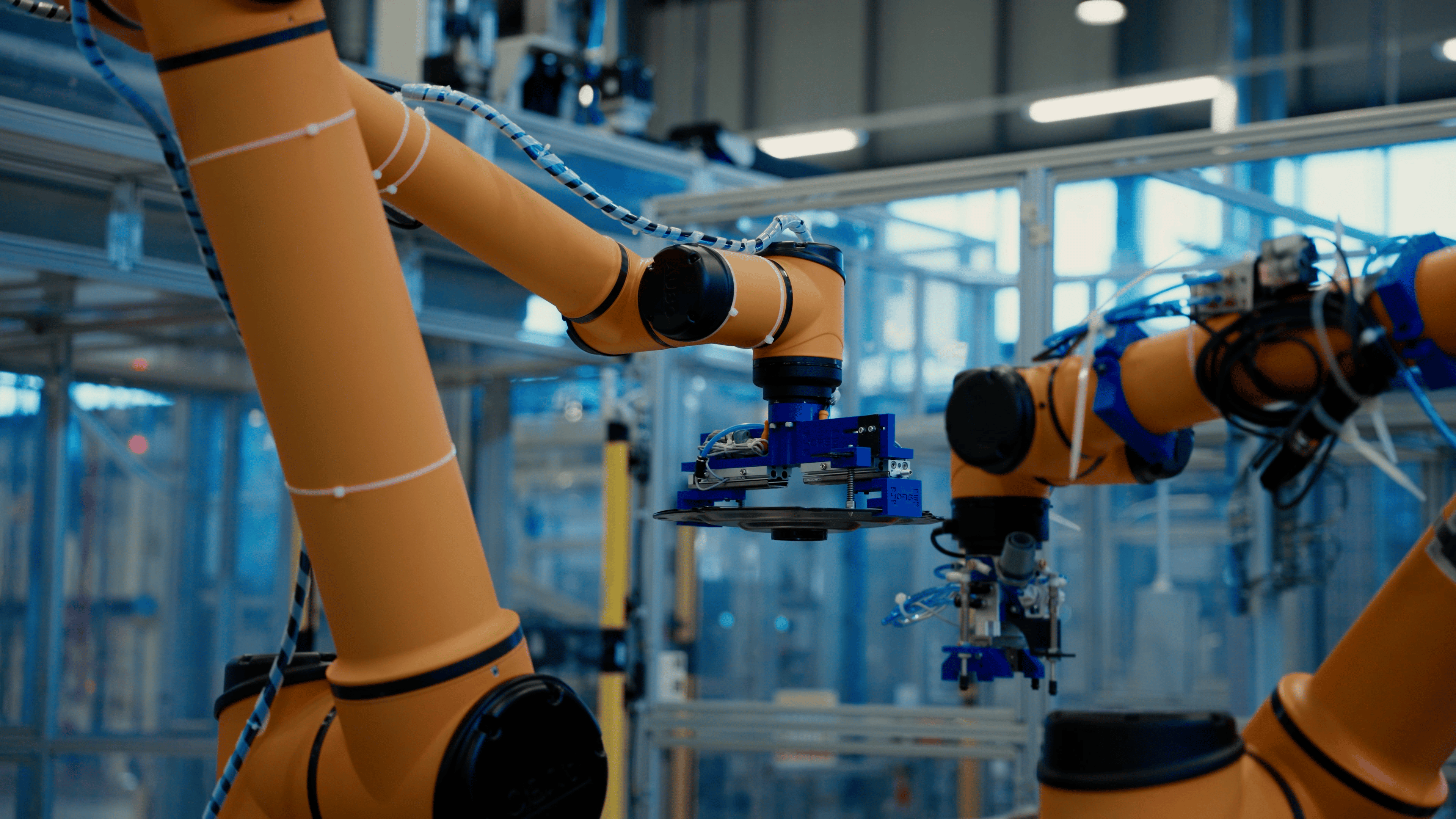
Cutting-edge technologies are found at every stage of the production process
Read more about why are modern engines getting smaller?
Simulating the factory before it is built
Technology is also used to optimize how components move around the factory.
We use logistics programs to simulate production requirements and determine how many Autonomous Ground Vehicles (AGVs) are needed to move materials and components around the plant.
Rather than just introducing automation and adjusting the process afterwards, the logistics can be modelled in advance to understand how the factory will operate.
The same principle is applied to powertrain testing, where engineers recreate the conditions, a powertrain will experience in a vehicle before it reaches the road.
Read more about how hybrid powertrains are tested and measured.
Innovation across the entire powertrain
From BSC and 3D scanning, to cobots and automated assembly, innovation is applied across the entire manufacturing process.
The result is not just a more technologically advanced engine. It is a manufacturing and development process designed around data, precision, repeatability and continuous control, helping to produce complex powertrain technologies at scale.
Find out more about our solutions here.