Hydrogen is the lightest element in the periodic table, and the most abundant in the universe. So, it’s no surprise that the automotive industry has always been fascinated by the idea of using hydrogen as an energy source for vehicles.
In this article, we’ll explore how hydrogen can be used as a transport fuel, how it can be produced, and what are its strengths and weaknesses as an alternative fuel source.
There are several ways to produce hydrogen, and they vary significantly in their carbon emissions. As a shorthand, the industry refers to these production pathways using color labels such as grey, blue and green.
Read more about alternative fuels with what are e-fuels and synthetic fuels.
There are two ways to use hydrogen to power a vehicle.
The first way is by using it as a combustion fuel, as we do with gasoline or diesel, and igniting it in an engine. This is attractive to many automakers because it allows them to continue using powertrain architectures that they’ve used for decades – allowing the industry to keep using its existing expertise, tools, and processes.
The second way is by using a hydrogen fuel cell, which produces electricity by splitting H2 molecules into positively charged protons and negatively charged electrons. The electricity generated by the fuel cell is then used to propel the vehicle via an electric powertrain.
Hydrogen has a lot of potential as an alternative fuel source for commercial vehicles
Read more about alternative fuels with what are biofuels, and how are they used in flex fuel engines?
There’s a lot to like about hydrogen as an automotive power source. First are its green credentials: when produced via renewable or nuclear-powered electrolysis, it generates no harmful emissions, making it a strong option for decarbonizing transport.
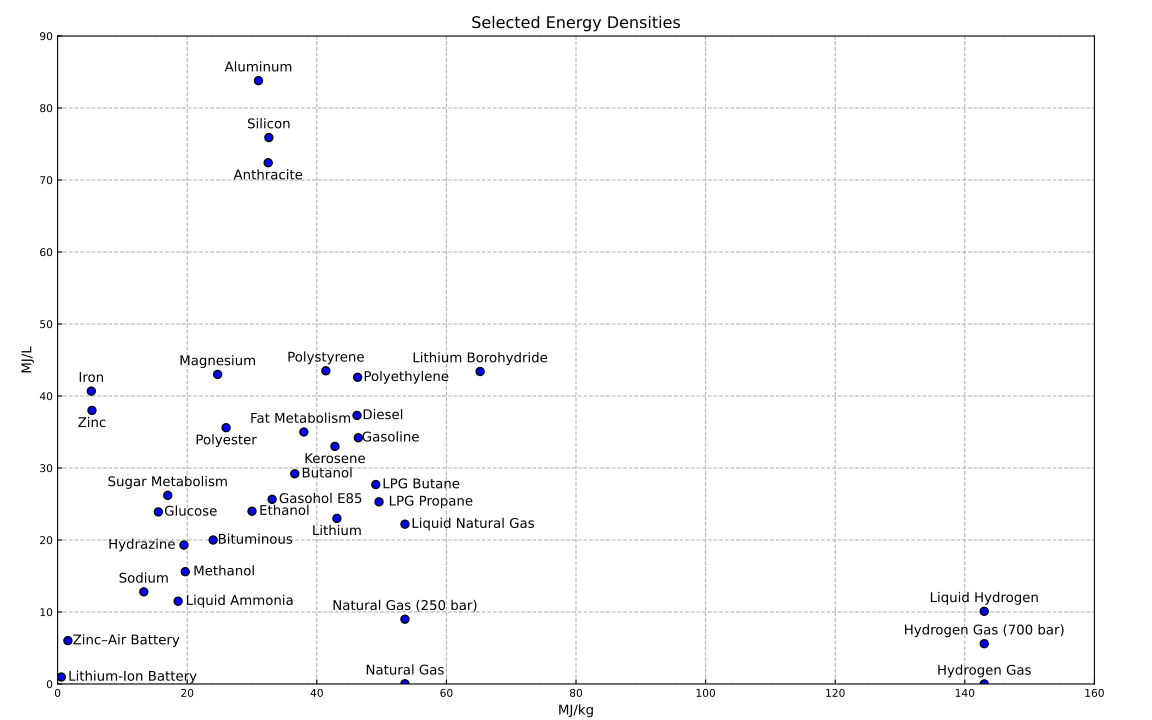
Hydrogen also offers exceptional energy density. A typical lithium‑ion battery stores under 10MJ/kg, while hydrogen exceeds 120 MJ/kg. As a result, many hydrogen vehicles can achieve greater range than most PHEVs.
Another major advantage is refueling speed. While charging an EV typically takes anywhere from one to twelve hours, a hydrogen vehicle can be refueled in just a couple of minutes, often using modified versions of existing fuel infrastructure.
This is particularly valuable for fleets and vehicles that return to a central depot each day. Large trucks, which already take longer to refuel, also benefit from hydrogen’s quicker turnaround time. And because bigger vehicles require disproportionately heavier batteries, hydrogen helps keep overall weight down, improving efficiency.
Read more about commercial vehicles and why hybrids will stay central to global mobility.
The core challenge with hydrogen is the energy‑intensive and costly process required to produce it. Significant investment is also needed to build out the infrastructure for widespread distribution, which undermines its economic viability.
Hydrogen must be stored at very high pressures, which means pipelines, tanks, and onboard storage all require stronger, heavier materials. If hydrogen combustion is used to power a vehicle, then the engine itself also needs to withstand the continuous high pressure that hydrogen exerts when it is stored in the fuel tank. Compounding this, hydrogen molecules are extremely small and more prone to leakage.
All of this results in vehicles that need thicker, heavier components, which means extra bulk, mass, and reduced efficiency.
Investment in infrastructure is a necessity for the success of hydrogen as a fuel source
Read more about why do engines need adapting for alternative fuels?
The future of mobility will not be one dominated by a single technology, but different solutions are required for different challenges. Hydrogen offers an extra tool in the decarbonization toolbox, adding to the range of solutions available to the automotive industry.
For example, in fleets operating light commercial vehicles, hydrogen combustion offers a potentially economical alternative to diesel, helping operators who want to reduce their emissions footprint. By leveraging a fleet’s existing fueling and storage infrastructure, fleet owners can extend the life of their vehicles while dramatically reducing their emissions footprint.
The advancement of this technology is not just a dream for the future, but an area we’re already seeing improvements in today. In one of our latest projects, our Swedish facility has partnered with Chalmers University of Technology to convert a gasoline engine to run on hydrogen. Work of this kind allows the industry to draw on innovations from traditional combustion engines and translate these improvements across fuel categories.
At Horse Powertrain, we design combustion and hybrid engines that use a range of different fuel types, including hydrogen, biofuels and other alternative fuels. Find out more about our products here.