Aside from gasoline and battery power, there are three alternative fuel options available to power a car: hydrogen, biofuels and e-fuels. These alternatives all have different characteristics, but primarily they function as low- or carbon-neutral alternatives to fossil fuels.
In this article, we will cover what synthetic fuels and e-fuels are, how they are produced, and what their use cases are.
What are synthetic fuels?
Synthetic fuels are a broad category of liquid combustion fuels created through chemical processing. Historically, most synthetic fuels have been created by treating preexisting fossil fuel sources: such as by liquefying coal and turning it into gasoline and diesel, or converting natural gas into fuel oils. More recently, there have also been experiments into biomass liquefication, converting wood or animal droppings into fuel oils.
All the above synthetic fuel options make use of solid or sequestered carbon in some way, and thus end up putting more carbon dioxide into the atmosphere. However, there is one category of synthetic fuels that doesn’t increase atmospheric CO2 levels: e-fuels.
Read more about alternative fuels with Brazil's technology neutral policies.
What are e-fuels?
Electro-fuels – also known as e-fuels – are a type of synthetic liquid fuels that do not rely on adding new carbon dioxide into the carbon cycle. Instead, they are made by extracting carbon dioxide from the atmosphere, which serves as a building block for the fuel. This pre-offsets the carbon dioxide emissions generated when burning the fuel, meaning that their effect on atmospheric CO2 levels is net neutral.
There are two main methods used to source the CO₂ for the synthesis of e-fuels. The first is through direct carbon capture (DCC), which sucks in ambient air through a membrane or liquid that captures CO₂ molecules. The second is by capturing CO₂ that is emitted from other industrial processes or power generation, using carbon that would otherwise be released into the atmosphere.

The use of renewable energy in the production of e-fuels can result in a carbon neutral fuel source
Read more about alternative fuels with what are biofuels, and how are they used in flex fuel engines?
How are e-fuels made?
E-fuels are so named because both carbon capture and electrolysis rely on electricity to extract inputs from naturally abundant resources – air and water.
Once CO₂ has been captured, either directly from the atmosphere or from some man-made process, it must then be converted into a usable fuel. To do this, CO₂ is combined with hydrogen. This hydrogen is sourced by splitting water into hydrogen and oxygen via an energy-intensive process called electrolysis.
Once combined, the CO₂ and hydrogen are subjected to high pressures and temperatures in the presence of a catalyst. This forces a reaction that converts the two molecule types into hydrocarbons, with longer-chain hydrocarbons forming under greater temperatures, pressures, and reaction times. By varying up the process, this means that an e-fuel can mimic the properties of any fuel oil – whether it be gasoline, diesel, or kerosene.
Read more about alternative fuels and how do hydrogen vehicles work?
What is the purpose of e-fuels and synthetic fuels?
Synthetic fuels historically existed to expand the available supply of transport fuels for countries that didn’t have access to oil, but did have access to coal or natural gas. As a category of synthetic fuels, e-fuels were mostly just of interest as a niche fuel, owing to their high purity.
However, in recent years, e-fuels have taken off for environmental reasons. If powered by renewables or nuclear energy, e-fuels can enable a transport system using combustion technology to achieve virtually net zero emissions. This allows economies to continue to benefit from the expertise and infrastructure developed to support combustion, while cutting transport lifecycle emissions.
This is particularly attractive for applications like marine, aviation, or aerospace, where the relative energy density of hydrocarbons means that they are set to remain the only economical fuel system for decades to come.
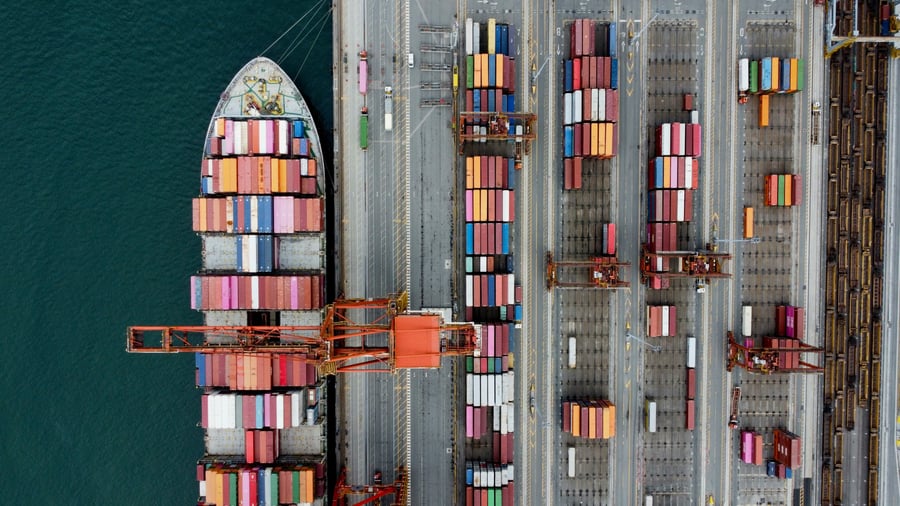
Maritime is an industry where e-fuels may be particularly attractive
Read more about alternative fuels and why India is adopting bioethanol.
What are the limitations of e-fuels?
As mentioned earlier, the hydrogen used in e-fuels is produced through electrolysis, an energy-intensive process. This is only environmentally beneficial if the electricity used comes from renewable sources or nuclear power. If powered by an electrical grid dependent on fossil fuels such as coal, oil, or gas, then e-fuels are simply a far less efficient way of employing these feedstocks.
This leads directly onto the problem of cost. Even in an idealised and maximally efficient setup, a litre of e-fuel will require around 25kWh of electricity to produce – however, it will only contain 10kWh of energy. This means that unless the cost per kWh of electricity from the grid is at least 60% lower than the cost per kWh of fuel oil, there’s no mass market for the technology. Currently, grid electricity’s price per kWh is at least double that of fuel oils in most countries.
Read more about alternative fuels and why do engines need adapting for alternative fuels?
Are e-fuels the future?
Despite these limitations, e-fuels remain an important decarbonization option for the mobility sector. Different markets require different solutions. As outlined in our article on Indian biofuel adoption, biofuels may be the right choice in some regions, while countries with abundant hydrothermal power, such as Norway, may be better suited to electrification. In other markets that enjoy cheap electricity but may lack the widespread charging infrastructure to support widespread BEV adoption, e-fuels may be a solution – along with applications like aviation or marine that will require access to liquid fuels for decades to come.
The future of mobility will be diverse and will require an open-minded approach supported by continuous innovation. At Horse Powertrain, we are at the forefront of this innovation, designing high-efficiency and alternative-fuel engines across powertrain architectures.
To learn more, take a look at our products here: spotlight solutions.