The European Commission is preparing to publish its revision of the CO₂ Standards Regulation for Cars and Vans in the upcoming weeks. This regulation, often simplified as the ‘Internal Combustion Engine (ICE) ban’, targets a 100% reduction in tailpipe emissions by 2035. The upcoming revision has the potential to create uncertainty.
While political views within the European Parliament and European Council remain divided, we at Horse Powertrain believe one point is clear across the automotive, supplier and energy sectors: Europe needs a more flexible, realistic pathway to emissions reduction.
What’s at stake in the EU’s 2035 CO₂ emissions standards revision?
Slower than expected battery electric vehicle (BEV) adoption, geopolitical tensions, supply chain dependencies, rising energy prices, job-market volatility.
These are just some of the issues amplifying concerns that a one-technology approach threatens Europe’s competitiveness. If the EU stays locked into a narrow definition of zero emissions, it risks sidelining decades of engineering excellence and weakening an industry that has been foundational to Europe’s economy.
Why Europe needs a technology-neutral approach to achieve decarbonization
At Horse Powertrain, we fully support the EU’s decarbonization ambitions. Electrification is essential, but it shouldn’t stand alone. Europe’s mobility transition must tap into every viable low-emissions innovation: advanced internal combustion engines encompassing hybrids, range extenders, eFuels, and more.
This approach brings several advantages:
- Faster, more affordable emissions reduction
- Realistic options for consumers and businesses
- A stronger, more resilient industrial base
- Better alignment with global competition
In short, technology neutrality is a smarter, more achievable path to net zero.
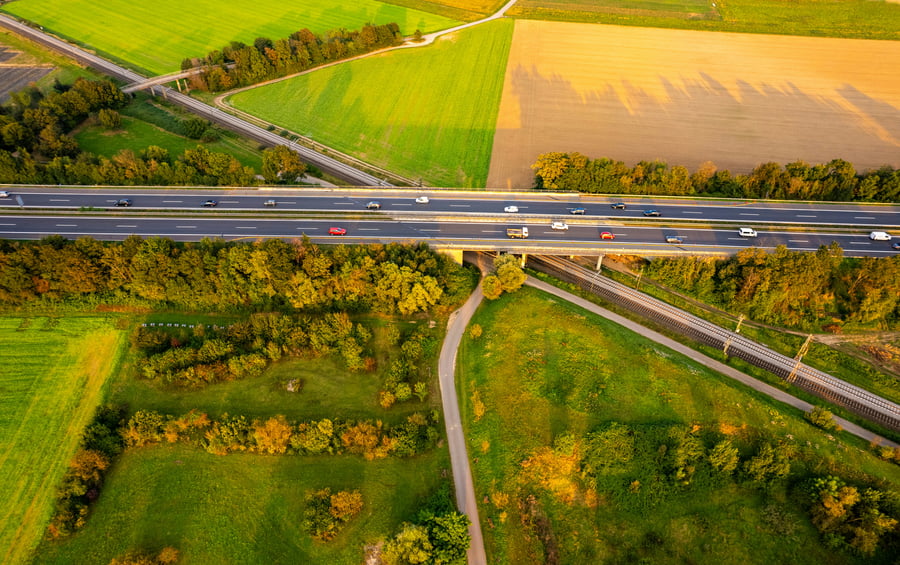
Rural areas are typically both more car dependent and have reduced access to EV charging facilities
BEVs are advancing but Europe needs diversified technologies to progress
BEV registrations grew 34% in the first half of 2025, an encouraging momentum that deserves recognition. But continued growth depends on solving real challenges: cost of ownership, uneven charging infrastructure, and rising electricity costs. These issues won’t disappear overnight.
That is why a diversified technological pathway is crucial. Many of these solutions are compatible with the existing refuelling network and vehicle fleet, offering immediate impact. Yet, in the EU they have lacked the same level of policy support as electrification.
A diversified approach accelerates decarbonization instead of limiting it.
Read more about how hybrids can speed up decarbonization.
Why standardized life-cycle assessments (LCA) are critical for effective EU Climate Policy
Today’s EU regulations measure emissions at the tailpipe only. This simplifies compliance but misses the broader reality of manufacturing, energy production, and end-of-life treatment.
A standardized life-cycle assessment (LCA) would offer a clearer, more science-based understanding of environmental impact. Europe is already moving in this direction through the Ecodesign Regulation, which proves it’s feasible.
Complementing LCA with a Carbon Correction Factor (CCF) would allow policymakers to compare technologies fairly. A CCF adjusts the CO₂ values of a vehicle to reflect the impact of emissions from processes such as manufacturing and vehicle end-of-life. Evidence from the industry-led Working Group on Monitoring Methodologies – of which Horse Powertrain is an active member – shows that ICE vehicles powered by renewable fuels can match or even outperform BEVs in overall CO₂ impact, depending on use case.
Other regions are already embracing this balanced approach. China promotes a mix of PHEVs, BEVs, and FCEVs, while Brazil has implemented lifecycle-based regulations that enable genuine technology neutrality. Europe should aim for the same level of pragmatism and ambition.
Read more about Brazil's technology-neutral automotive policies.
Protecting Europe’s industrial competitiveness through an open, multi-technology framework
Horse Powertrain employs 8,000 people across Spain, Portugal, Sweden and Romania. These talented engineers, operators and specialists represent Europe’s industrial backbone.
A technology-open transition protects these high-value jobs and keeps production and innovation in Europe. Efficient, low-carbon combustion engines, manufactured for use with sustainable fuels can remain a competitive advantage for the region –supporting decarbonization without sacrificing industrial capability.

Modern European cities achieved much of their success and development from industrial competitiveness
Defining CO₂-neutral fuels: A practical, science-based approach for EU policymakers
A clear and workable definition of CO₂-neutral fuels is essential. The Commission’s earlier proposal required a full 100% lifecycle greenhouse-gas reduction – an ideal that no energy pathway, including full electrification, can truly meet.
The industry Working Group recommends a more realistic 70% reduction threshold aligned with the Renewable Energy Directive (RED). Under this approach, CO₂-neutral fuels include renewable and synthetic fuels, biofuels, biogas, RFNBOs, and recycled carbon fuels that meet RED sustainability criteria.
In practice, a vehicle running exclusively on fuels that meet these criteria should be considered CO₂-neutral at the point of use in EU standards.
Multiple pathways to achieving net zero in Europe
Europe’s climate ambitions are achievable, but only with an approach that balances ambition with realism. By embracing technology neutrality, the EU can:
- Reduce CO₂ faster
- Maintain industrial strength
- Protect skilled jobs
- Support consumer and business choice
- Stay globally competitive
Horse Powertrain is ready to help drive this transition efficiently, responsibly, and in partnership with Europe’s policymakers and industries. With solutions spanning hybrid powertrains, internal combustion engines powered by alternative fuels, and EV range extenders, we believe that there are many paths to net zero.
For more information on our solutions, contact us.