The automotive industry is in the middle of a generational shift.
New competition and technology, alongside volatile regulations and supply chains, are all placing significant pressures on the business models of automakers. To survive and thrive, brands are having to innovate and differentiate their models at a rate that’s without precedent in automotive history.
Navigating this differentiation arms race is the challenge facing automakers today, and many of them are having to face it with limited capital and labor – making opportunity costs more salient than ever.
This is where a simple principle can help the industry: the Pareto Principle, or the 80/20 rule. It’s the idea that 80% of an output is due to just 20% of an input – for automakers, this means 80% of their model’s differentiation is due to just 20% of its feature set.
The opportunity cost of in-house powertrain development
For most consumers, differentiation is now to be found via software, connectivity, improved user experience, and design. It is these features that are driving 80% of model differentiation today, despite making up less than 20% of a vehicle’s systems.
If differentiation is the existential question, then automakers need to be investing in the above features. But many still choose to devote enormous capital, R&D and manufacturing capacity to developing under-the-hood powertrain systems in-house – despite these no longer being the systems that drive differentiation.
Automakers need to take stock, and consider the opportunity cost of this mindset. What’s the logic to each of them individually reinventing the wheel – or, more accurately, their own low-differentiation combustion and hybrid powertrains?
Instead, there’s an alternative model: delegating powertrain development and production to a trusted partner. Along with freeing up capital and labor for high-differentiation activities, this allows automakers to tap the benefits of high economies of scale in innovation and production.

The modern global economy is dependent on efficient decision-making
Read more about why the EU must adopt a technology-neutral approach to automotive.
What partnerships with system integrators bring to the table
However, the state of vehicle technology itself provides another reason why collaboration is becoming the new competitive edge.
Powertrains are no longer standalone subsystems. The drive for efficiency, mass saving, and supply chain simplification has continuously pushed the industry to consolidate subsystems into “all-in-one” units, often with a single merged housing. A great example is the trend toward integrated e-axles, made up of an electric motor, reducer transmission, and power module.
While developing better engines, motors, inverters, and transmissions continues to matter, today’s market places an incredible premium on system integration. The gains in energy efficiency, volume, and packaging flexibility through good integration are more valuable than ever before in improving model quality and affordability.
However, these modern system integration workflows don’t fit in with the natural purview of traditional suppliers. Instead, they represent a new stage below final vehicle assembly by an automaker: one that demands someone with a full-system perspective, while not being the automaker themselves.
This engineering and production niche needs to be filled by a new type of organization. This is the very trusted partner we mentioned earlier: a specialist in whole-system development and production.
Read more about how hybrids can speed up decarbonization.
How Horse Powertrain helps automakers differentiate
At Horse Powertrain, our role is to remove the cost, complexity and time associated with low-differentiation powertrain development, so automakers can redirect resources to the features that truly set their brands apart.
With 18 plants and five technical centers worldwide, our global network allows us to absorb manufacturing risk and deliver proven, efficient, compliant systems at scale – without requiring automakers to build or maintain their own dedicated facilities. Our engineering teams work with automakers across the full development cycle.
There are many roads to net zero, so the journey to low emission mobility requires hybrids, range-extended EVs, high-efficiency ICEs, eFuels and more. Our platforms are designed to support this without additional capital expenditure or lengthy development cycles.
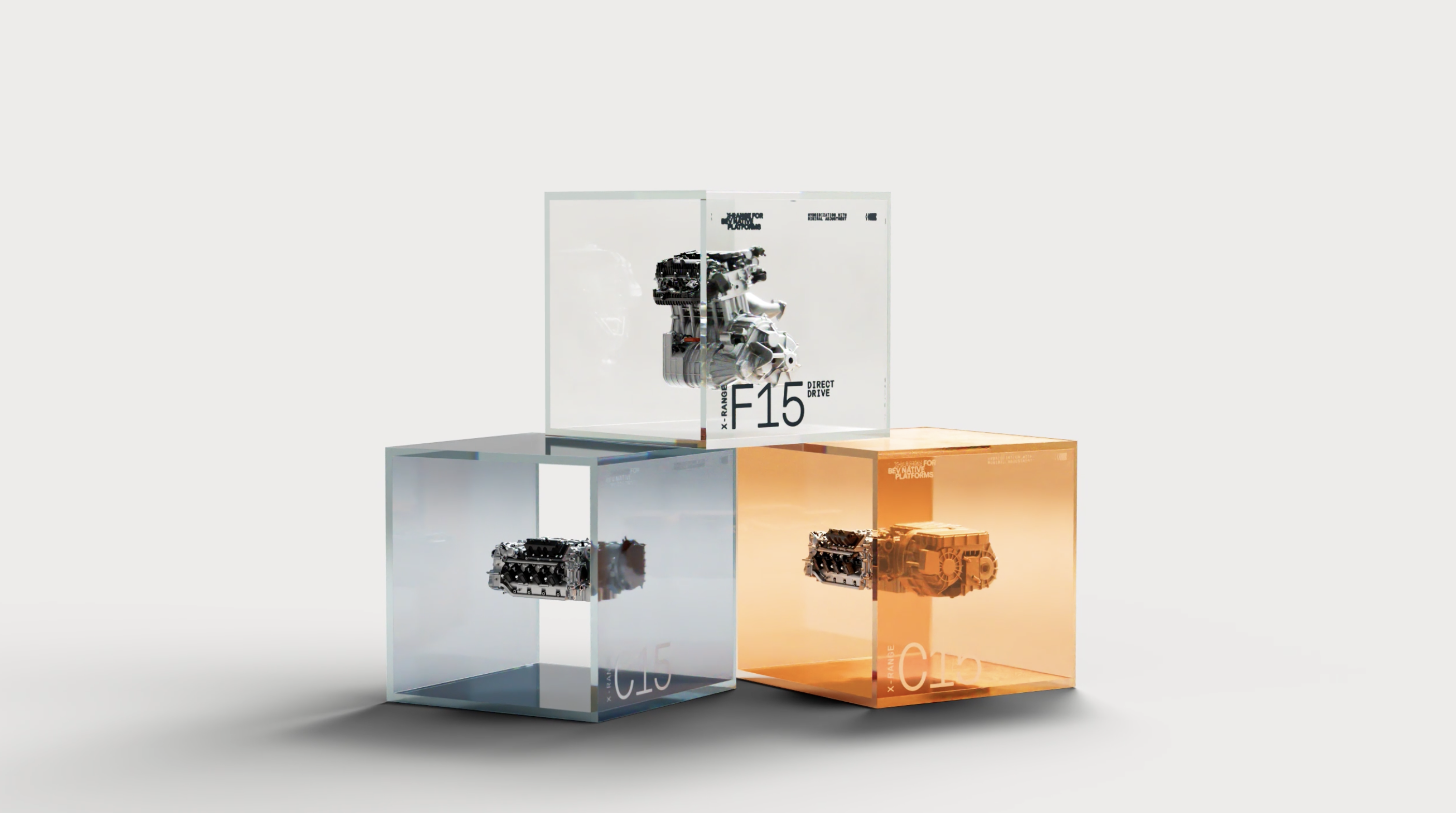
Our Future Hybrid System, for example, integrates an engine, transmission, e-motor and power electronics into a single compact module that can replace a BEV’s front electric drive unit, turning it into a hybrid, plug-in hybrid, or range-extended EV: all without any redesigns, recalibration, or new tooling.
This allows automakers to move quickly as markets evolve. By providing complete powertrain solutions, we reduce ICE-related investment by up to 50% and cut development timelines by months or even years.
Read more about Brazil's technology-neutral automotive policies.
Helping automakers focus on the right things, not everything
The 80/20 rule is not a cost-cutting argument, but a strategy for staying ahead of the competition.
Automakers that embrace the Pareto reality can focus on what truly drives customer value, while partnering with experts who can help them deliver innovative solutions better, faster and at global scale.
At Horse Powertrain, we enable exactly that shift.
We provide the systems, integration expertise and manufacturing footprint that free up automakers to focus on the 20% of innovation that defines their models and brand.
Because in a market moving this fast, the real advantage isn’t doing everything. It’s doing the right things.
For more information on our solutions, contact us.