
Yesterday, members of the Horse Powertrain team spoke at the European Parliament to launch an exhibition on how EU innovations can help decarbonize road transport.
The main question for the evening was how Europe can decarbonize its mobility ecosystem while maintaining industrial competitiveness. Our team presented alongside Repsol - including Deputy CEO, Luis Cabra - whom we worked with earlier this year to develop a prototype engine that runs purely on 100% renewable fuels and consumes just 3.3 liters of fuel every 100 kilometers.
A number of MEPs attended, including Massimiliano Salini - Rapporteur of the CO₂ Emission Standards Regulation, who presented his report the day before our launch event - and Raúl De La Hoz Quintano, who presented and opened the event. Additionally, representatives from the European People’s Party (EPP), the Progressive Alliance of Socialists and Democrats (S&D) and Renew Europe were present. The MEPs shared some of their thoughts on how decarbonization can be achieved without compromising industrial progress, providing clear validation of the need for close collaboration between manufacturers and policy makers to protect the health and progress of the industry.
Throughout the evening, we explored how the EU’s review of CO2 standards for cars and vans could reconcile commercial viability with the bloc’s climate ambitions.
The EU’s engine expertise
A key discussion topic was how Europe has an extremely deep reservoir of expertise and capability when it comes to engine technology. Europe benefits hugely from over 125 years of continuous engine production, and it maintains global leadership in many categories of technology: it’s widely recognized as the leader in smaller, high-efficiency engines that feature capabilities like turbocharging, and in the integrations of these engines into hybrid powertrains.
This doesn’t just mean a legacy of engine development and manufacturing facilities, but also unprecedented institutional and engineering knowledge around mechanical engineering and thermal management. This is closely tied up with the practical knowledge, technique, and skills of engineers, technicians, and workers. This means that Europe’s advantage is like a muscle: if production stops, then it wastes away.
It’s not in Europe’s interest to let this capability go. But it’s also not in the global interest. According to BloombergNEF, EVs will make up around 40% of the global passenger vehicle fleet in 2040 – meaning that at least 60% will still feature an engine of some sort. However, the Paris Agreement is targeting net zero global emissions by 2050: so, what do we do with this 60% of vehicles?
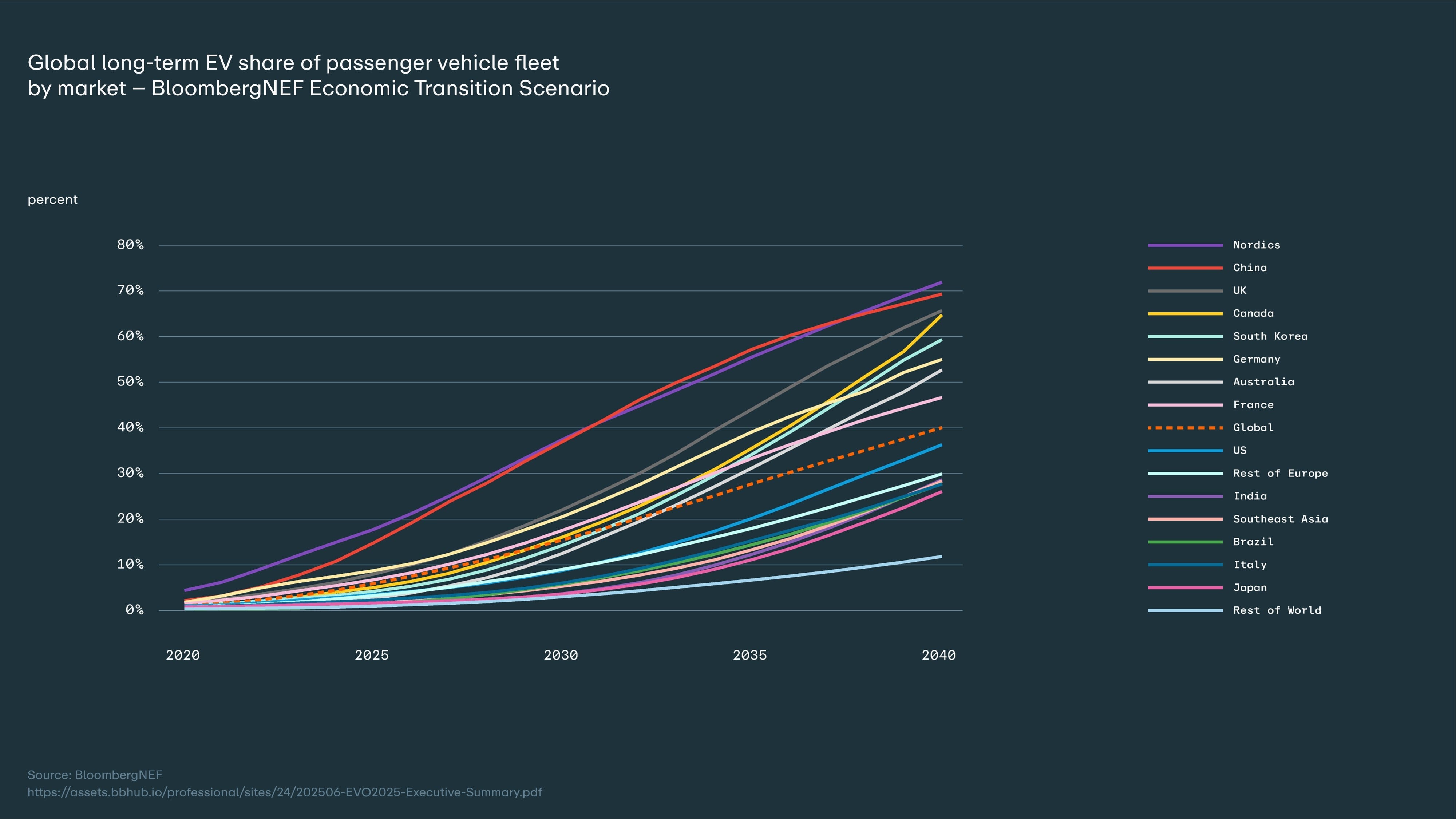
According to BloombergNEF, EVs will make up around 40% of the global passenger vehicle fleet in 2040.
This is where Europe’s expertise comes into play. By reducing the emissions intensity of this 60% share of the passenger car fleet, Europe can leverage its continuing leadership around smaller, efficient engines and hybrid powertrains to make net zero far more achievable globally.
As pointed out by Horse Powertrain’s CEO Matias Giannini at this year’s Beijing Auto Show, our own team is aiming to achieve 20-25% gain in the thermal efficiency of hybrid powertrains in the coming year. For a vehicle parc split 50/50 between BEVs and hybrids, these efficiency gains would mean the parc’s emissions would be identical to one that was composed of 80% BEVs.
Read more about why hybrids will stay central to global mobility.
The importance of technological neutrality
To achieve this, however, European carmakers would need the EU to commit to technological neutrality – deciding whether a solution is acceptable based on the final outcome for global emissions levels, rather than the proximate tailpipe emissions of vehicles. And in practice, given how engine expertise is at the heart of the European comparative advantage, it’s likely a critical one to the viability of the continent’s automotive industry.
Though Europe has made commendable progress on building up its critical materials pipeline with the implementation of its Critical Raw Material Act (CRMA) in 2024, the impact of this policy will take years and even decades to be felt. Developing Europe’s midstream refining capabilities for rare earth minerals or materials such as lithium will not occur over night.
Without its engine expertise, European carmakers would be dependent on imports of these materials – and in practice, likely in the form of semi- or fully-manufactured vehicle components for installation in EVs. And, in practice, it will be doing so at a relative disadvantage compared to more developed markets for EV development.
Though the CRMA is a great step forward, the matter still risks becoming existential for European automotive brands – or at least their production capability on the continent. And even if just the latter is lost, the cost to Europe is immense.
Automotive accounts for 33% of Europe’s R&D spending, driving advances in key applied sciences and technical domains associated with simulation, modelling, and computing. And that’s not to mention the critical role played by automotive in providing consistent demand for European providers of steel, aluminum, glass, plastics, synthetic materials, electronic components, and machine tools. Automotive production is the foundation for the European industrial and innovation ecosystems.
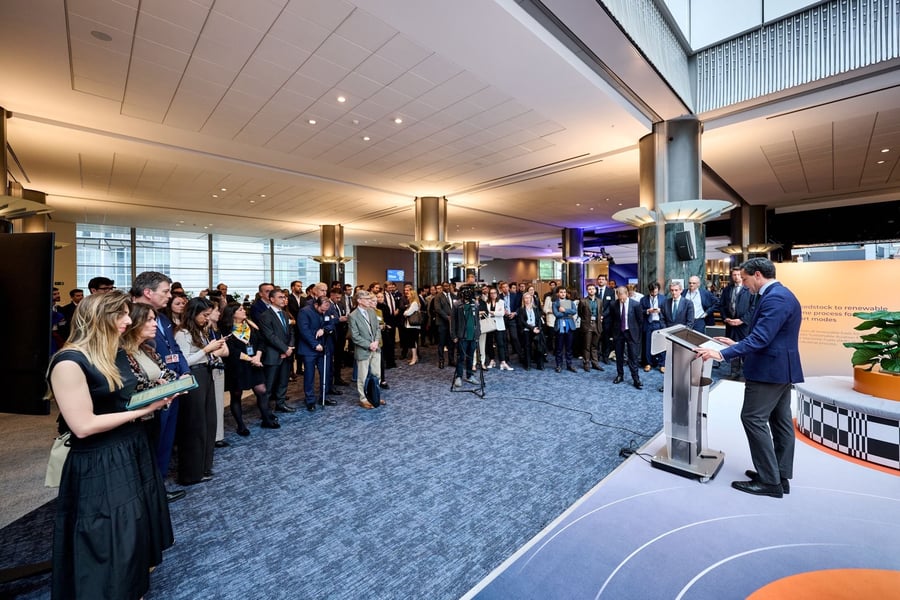
Members of the Horse Powertrain team, Repsol, and MEPs gathered at the European Parliament on 3rd June 2026
Read more about technology-neutral automotive in Europe and Brazil.
What the industry needs
Ultimately, recent moves by the EU towards technological neutrality are critical to the viability of European automotive. What the industry now needs is reliability and continuity of policy, so it can make investments in engine and hybrid technologies with full confidence in its ability to realize a return over the lifespan of these technologies.
This discussion in the EU is part of a broader debate on how automotive can maintain commercial viability while helping the world to decarbonize. Within the automotive industry itself, many leaders are now shifting to a more nuanced mindset on the future of the global powertrain and technology split. Find out more about how we explored this mindset shift at this year’s FT Future of the Car summit.
To read more about Horse Powertrain’s solutions, click here.